
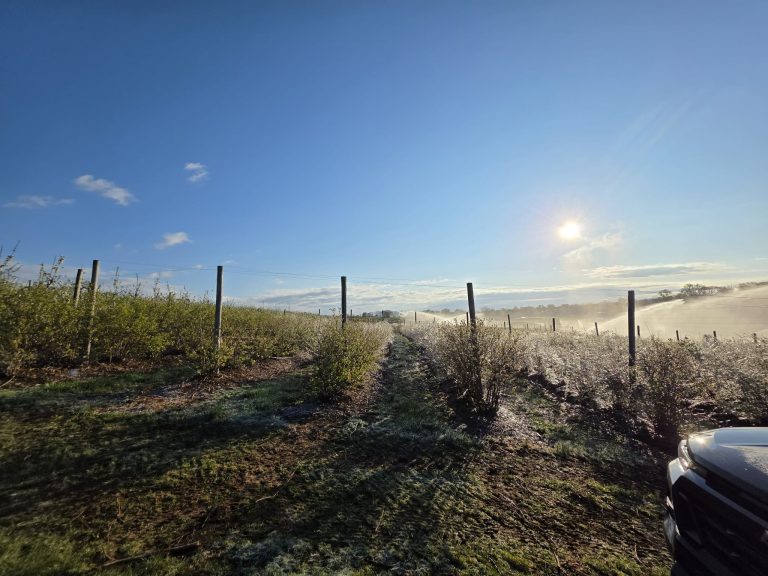
When spring temperatures swing, frost protection becomes a top priority on the farm. Earlier this month, we experienced a cold snap with overnight temperatures dipping into the low 20s—conditions that can damage tender buds on emerging fruit crops like apples, peaches, cherries, plums, strawberries, and blueberries.
When frost threatens, our farm team works overnight to help protect the season ahead and ensure a healthy harvest later in the year.
How We Protect Fruit Crops During a Frost Event
To protect our orchards and fields during freezing temperatures, we use a combination of proven orchard frost protection methods:
- 🌬 Frost Busters blow heated air through our apple and peach orchards
- 🕯 Anti-frost candles are placed in pears, cherries, peaches, and plums (about 80 per acre) to raise temperatures by a few critical degrees
- 💨 Large orchard fans circulate air to prevent cold air from settling
- 🍓 Double row covers protect our strawberry patches from frost damage
These tools are essential for protecting delicate fruit buds during sudden temperature drops in early spring.
Blueberry Frost Protection Using Overhead Irrigation
Frost risk doesn’t end after a cold snap—especially for sensitive crops like blueberries.
On subsequent cold nights, we rely on overhead irrigation for frost protection, used specifically on our 7 acres of highbush blueberries.
This method works through a simple scientific principle:
as water freezes, it releases heat, helping keep plant tissue at approximately 32°F, even when air temperatures drop below freezing.
To make this system effective, timing is critical:
- Water is applied as temperatures approach freezing
- Irrigation begins earlier when conditions are dry
- The system runs continuously through the coldest overnight hours
- It is only shut off once temperatures rise and ice begins to naturally melt
By morning, blueberry plants are often covered in ice—but that ice acts as insulation, protecting delicate buds from frost damage.
Why Timing Matters in Frost Protection
“This is one of those moments where experience and attention to detail really matter,” says Rebekah Alstede Modery.
“We’re watching the weather closely and making decisions in real time to protect the crop. It may look like we’re freezing the plants, but we’re actually using water to keep them safe.”
She adds:
“This is a great example of the work that goes on behind the scenes to protect our most critical crops. From frost protection in the orchards to overhead irrigation in the blueberry fields, these are the kinds of decisions and actions that help carry us through the season. When you’re enjoying fresh blueberries in July, we hope you think of the dedicated, talented team that made it all possible.”
Farming Through Frost to Protect the Harvest
Farming means working with nature—and sometimes through the night—to adapt to whatever the season brings.
These frost protection efforts are just one example of the care, science, and commitment that go into growing a healthy harvest for everyone to enjoy later this year.


